What to Ask at Your Dental Implants Consultation in Calabasas CA
A dental implant consultation can feel deceptively simple. You sit in a chair, answer a few health questions, hear a treatment recommendation, and go home with a price estimate. Yet that first visit often shapes everything that follows, from the timeline and surgical approach to the long-term comfort of your bite and the look of your smile.
That is why the best consultations are conversations, not sales presentations.
If you are researching Dental Implants Calabasas CA, it helps to walk in knowing what matters most. Not every patient needs the same treatment plan. A healthy 35-year-old replacing one premolar presents a very different case from a 68-year-old with years of bone loss, multiple missing teeth, and a history of gum disease. Good implant dentistry accounts for those differences from the start.
The right questions can tell you whether you are dealing with a clinician who is thinking carefully about diagnosis, planning, risk, and long-term maintenance. They also help you understand what you are agreeing to, which matters because implant treatment is rarely a one-appointment fix. It is a process that may involve imaging, extractions, grafting, healing, surgery, temporary restorations, final crowns, and follow-up care.
Start with the big picture, am I truly a good candidate?
Many patients begin with the obvious question, “Can I get dental implants?” That is reasonable, but it is too broad to be useful. A better version is, “What makes me a good candidate, and what could make implant treatment harder in my case?”
That question opens the door to a more honest clinical discussion. The dentist should evaluate your gum health, bone volume, bite forces, medical history, smoking or vaping habits, medications, sinus anatomy in the upper jaw, and habits like clenching or grinding. If the answer sounds vague, or if you hear a quick “yes, no problem” before anyone has examined your bone levels or taken proper imaging, that is a red flag.
In practice, many patients are candidates for implants, but some need preparatory treatment first. One person may need gum therapy before surgery. Another may need a sinus lift. Someone else may technically qualify for an implant, but have a higher risk of complications because of uncontrolled diabetes or heavy nicotine use. A good clinician will explain not only whether implants are possible, but also what conditions need to be improved first to give the implant a fair chance of lasting.
Ask what kind of records and imaging are necessary
Implant planning should not be guesswork. If a consultation for Dental Implants Calabasas CA does not include a discussion of imaging, ask directly how the dentist plans to evaluate bone and anatomy.
Traditional dental X-rays are useful, but many implant cases benefit from a 3D cone beam CT scan. A CBCT can reveal bone width, bone height, nerve location, sinus proximity, and defects that may not show clearly on a two-dimensional image. This matters because implant placement is three-dimensional. A site may look acceptable from one angle and prove too narrow from another.
You do not need to demand advanced imaging in every scenario, but you should understand why it is or is not recommended in your case. If the implant site is near the mandibular nerve, or if you are replacing an upper molar close to the sinus, the value of detailed imaging is obvious. It is also useful when a case may require grafting or when several missing teeth affect the overall bite.
A strong follow-up question is whether the final crown is being planned before the implant is placed. Experienced implant dentists often work backward from the ideal tooth position, not forward from the available bone alone. That distinction sounds subtle, but it changes outcomes. An implant can integrate successfully in bone and still end up in a poor position for the final restoration. When that happens, function and esthetics suffer.
Clarify who is doing what
One of the most practical questions you can ask is, “Who will place the implant, and who will make the final Dental Implants Calabasas CA tooth?”
In some offices, one dentist handles the entire process. In others, an oral surgeon or periodontist places the implant, and a restorative dentist completes the crown. Neither model is inherently better. The key is coordination. Patients often assume the handoff between specialists is seamless. Sometimes it is. Sometimes it is not.
If more than one clinician is involved, ask how treatment planning is shared and how communication happens between offices. Will both doctors review the CBCT? Who determines implant size and exact placement? Who is responsible if the implant integrates well surgically but is difficult to restore because of angulation or spacing? These are not confrontational questions. They are practical ones.
I have seen patients frustrated because they thought they were buying “an implant,” when in reality they were entering a staged process spread across multiple providers, each with separate fees and scheduling. A clear explanation at the consultation stage prevents a lot of confusion later.
Get specific about the treatment plan, not just the headline
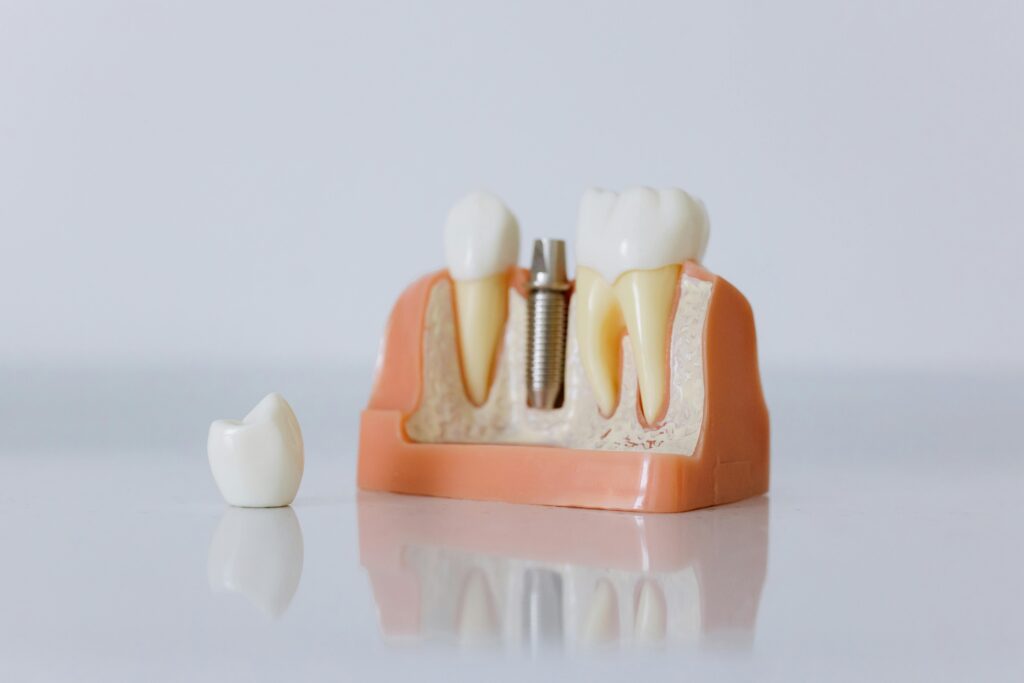
When patients hear “dental implant,” they often picture a single item. Clinically, that phrase may refer to several components: the implant fixture in the bone, an abutment, and the visible crown. If you are missing more than one tooth, the design becomes even more important. Not every missing tooth requires its own implant, and not every implant restoration uses the same materials.
Ask the dentist to explain what is being proposed in plain language. If it is a single-tooth implant, where exactly will it go? If multiple teeth are missing, will the plan involve an implant-supported bridge or individual implants? If all teeth in an arch are being replaced, is the recommendation removable or fixed?
This is also the moment to discuss materials. Patients commonly ask whether zirconia or titanium is “better.” The answer depends on the case. Titanium implants have the longest track record and are widely used. Zirconia options exist and may be considered in selected situations. For the visible crown, material choice affects strength, wear, and esthetics. The best consultation explains those trade-offs without overselling one option for every patient.
Ask whether bone grafting is likely, and why
Bone grafting is one of the biggest surprises for patients. Many come in expecting a straightforward implant placement and learn they first need additional bone support. That can sound alarming, but it is common.
The useful question is not simply, “Do I need a graft?” Ask, “If you are recommending grafting, what problem is it solving in my case?”
Sometimes grafting preserves a socket after extraction so future implant placement is easier and more esthetic. Sometimes it rebuilds a ridge that has become too narrow or too short over time. In the upper back jaw, a sinus augmentation may be suggested because the sinus has expanded and reduced available bone height.
An honest answer should describe the extent of the deficiency and how it affects stability or appearance. It should also include what happens if you decline the graft. In some cases, declining grafting means the implant cannot be placed predictably. In others, an alternative design may still work, but with esthetic or functional compromises. That is important information.
Pain, swelling, and recovery deserve a real answer
Most patients ask, “Will it hurt?” It is a fair question, but not the only one that matters. A fuller version is, “What should I realistically expect during the first 48 hours, the first week, and the healing phase after that?”
A good clinician will avoid both scare tactics and sugarcoating. Many routine implant placements involve less discomfort than patients expect, especially when compared with a difficult extraction. At the same time, recovery varies. A single implant in a straightforward site is different from multiple implants with grafting, or a full-arch procedure with sedation and temporary teeth delivered the same day.
Ask about swelling, bruising, dietary restrictions, time off work, exercise limitations, travel considerations, and whether you will need someone to drive you home. If sedation is planned, the instructions become more important. If you speak in public for work, teach, sing, or have an event coming up, mention that. Timing matters.
One patient I once heard about scheduled an implant procedure the day before a family wedding because he had been told it was “minor.” Technically, it may have been minor surgery. In real life, facial swelling and a careful soft-food diet changed his plans. That kind of mismatch usually comes from incomplete consultation, not from the procedure itself.
Understand the timeline from start to finish
Implants require patience, and the timeline depends on biology. Patients often focus on the surgery date, but that is only one milestone.
Ask for a realistic sequence of events. Will the tooth be extracted first and the implant placed later, or can they happen at the same visit? If immediate placement is possible, is it being recommended because it is genuinely appropriate or because it sounds faster? Immediate protocols can be excellent in selected cases, but they are not automatically better.
Healing periods can range from a few months to longer if grafting is involved. Some patients can leave with a temporary tooth the same day. Others should not have immediate loading because of stability concerns, bite forces, or site quality. You want to know what controls the timing in your case.
It is also worth asking what could lengthen the process. Slow healing, additional grafting, infection, implant instability, or the need to refine the bite can all affect scheduling. A thoughtful dentist will mention these possibilities without making them sound inevitable.
Cost matters, but so does what is included
Fee discussions can be uncomfortable, but they are essential. “How much is an implant?” is too blunt to be useful because the number changes based on what is bundled and what is not.
Ask for a written breakdown of expected fees and what each fee covers. That may include consultation, CBCT imaging, extraction, grafting, implant placement, healing abutment, temporary restoration, final abutment, final crown, sedation, follow-up visits, and any surgical guide. If another specialist is involved, ask whether their fee is separate.
Here are five cost questions worth asking before you commit:
- What parts of treatment are included in the estimate, and what parts are billed separately?
- If bone grafting or additional procedures become necessary, what price range should I expect?
- Are the temporary tooth and final crown both included?
- What happens financially if the implant does not integrate and must be replaced?
- Will my insurance contribute to any portion of the treatment, even if it does not cover the entire implant?
That fourth question is especially important. Implant failure rates are generally low in well-selected cases, but low does not mean zero. Offices differ in how they handle replacement costs. Some may waive part of the fee under certain conditions. Others may not. You should know the policy before treatment starts, not after a setback.
Ask about risks in your specific case, not generic risk forms
Every surgical procedure comes with consent forms listing possible complications. Those forms are necessary, but they are broad by design. They do not replace a personalized discussion.
Ask, “What are the main risks in my specific situation?” That wording matters. It prompts a case-based answer.
For example, if you are considering a lower implant near the nerve, altered sensation may be part of the discussion. If the site is in the upper molar area, sinus anatomy could matter. If you have a history of periodontal disease, long-term tissue stability may deserve extra attention. If you grind your teeth, mechanical overload and restoration wear become more relevant.
The best clinicians do not hide uncertainty. They explain where the risk sits and how they reduce it through planning, surgical technique, bite management, and maintenance. Confidence is useful. Overconfidence is not.
Maintenance separates short-term success from long-term success
Many implants fail slowly, not dramatically. They do not always “fall out.” More often, problems build through inflammation, poor cleaning access, untreated grinding, or neglected recall visits.
Ask how you will need to care for the implant at home and how often the office wants to see you after treatment is complete. A single implant crown should still be cleanable. If the design makes hygiene difficult, that issue should be addressed early. For full-arch work, maintenance becomes even more important because food trapping, screw access, tissue adaptation, and prosthesis cleaning can get complicated.
You should also ask what signs of trouble deserve a call. Bleeding, persistent bad taste, mobility, gum tenderness, or changes in the way the crown contacts your bite are worth reporting. Implants do not decay the way natural teeth do, but the tissues around them can absolutely become inflamed.
Esthetics deserve their own conversation
In Calabasas, many patients are understandably focused on appearance. If the implant is in the smile zone, ask how the office plans to match the shape, color, and gum contour of the neighboring teeth. This is where implant dentistry becomes part surgery, part restorative design, and part tissue management.
Front-tooth implants are often the most demanding because tiny discrepancies show. The position of the implant, the thickness of the facial bone, the shape of the temporary, the contour of the crown, and the health of the papilla all affect the final look. A technically integrated implant can still look unnatural if those details are overlooked.
Ask to see examples of cases similar to yours, especially if the missing tooth is visible when you smile. Not every office photographs every case, but many do. Similar matters here. A back molar replacement tells you little about a central incisor in a patient with a high smile line.
The consultation should cover alternatives too
One of the simplest ways to judge the quality of a recommendation is to ask, “What are my reasonable alternatives, and why do you prefer this option?”
If the answer is “implants are always best,” you are not getting nuanced advice. Implants are excellent tools, but they are not the only treatment in every scenario. Depending on your age, bone condition, neighboring teeth, finances, bite, and goals, alternatives might include a bridge, a removable partial denture, or delaying treatment for a period while other oral health issues are stabilized.
That does not mean alternatives are equal. Often they are not. But a professional consultation should explain why one path makes more sense than another for you, not for some generic patient.
A short checklist for the appointment itself
If you want to walk into the consultation prepared, bring more than your insurance card. A little preparation often leads to better answers.
- A current medication list, including supplements
- Information about past dental surgeries, especially extractions or grafts
- Notes about clenching, grinding, or TMJ symptoms
- A timeline of when the tooth was lost or when pain began
- Your top two priorities, such as appearance, function, speed, or budget
That last point is often overlooked. Patients sometimes feel they should want everything equally. In real life, they do not. One person values the most natural appearance above all else. Another needs the fastest stable solution because speaking at work matters more than ideal gum architecture. Another has a firm budget ceiling. None of that is wrong. It simply needs to be stated clearly.
How to tell whether the consultation was actually good
You do not need to understand every technical term to judge the quality of the visit. Focus on whether you left with clarity.
A strong implant consultation usually leaves you able to answer a few basic questions in your own words. What problem is being treated? Why is this plan appropriate for your anatomy and goals? What other options exist? What steps come first? What will healing be like? What could complicate treatment? What will it cost, and what is not included? How will the implant be maintained after it is finished?
If those answers remain fuzzy, pause before committing. That does not automatically mean the office is poor. It may simply mean you need a second conversation or a second opinion. Implant treatment is too important, and usually too expensive, to proceed when the plan still feels vague.
Why this matters in a place like Calabasas
Patients seeking Dental Implants Calabasas CA often have access to many well-marketed options. That can be helpful, but it can also blur the difference between branding and clinical judgment. A polished office, same-day promises, or attractive financing are not substitutes for careful diagnosis and disciplined treatment planning.
The most successful implant cases tend to come from practices that do the unglamorous things well. They take records seriously. They evaluate gum and bone health honestly. They coordinate surgery and restoration carefully. They discuss maintenance before placing the implant, not after a problem appears. And they tailor the plan to the person sitting in the chair.
A consultation should give you confidence, but not because you were dazzled. It should give you confidence because the dentist listened closely, examined thoroughly, explained clearly, and answered direct questions without rushing or deflecting.
That is what to look for. Not perfection. Not a rehearsed pitch. Just evidence of sound judgment, transparency, and a plan built around your actual mouth, your actual health, and your actual priorities.
Oaks Dental
5000 Parkway Calabasas, Suite 308
Calabasas, CA 91302, United States
Phone: +1 (818) 412-8349
FAQ About Dental Implants Calabasas CA
How much does a dental implant cost in California?
Costs vary with the number of teeth replaced, restoration type, imaging, and any extractions or bone grafting. Request an itemized estimate after an examination; a single advertised price may not include every treatment stage.
Can people with autoimmune disease get dental implants?
Some people may qualify, but the condition, medications, oral health, and healing risks require individual assessment. Share your medical history with your dentist, who may coordinate with your treating physician.
Can you have dental implants if you have osteopenia?
Osteopenia does not by itself establish whether implants are suitable. Your dentist must evaluate jawbone support and review bone-related medications and other risks before recommending treatment.